How to Know When Your Church Sound System Needs an Upgrade
Sound has a significant impact on how people experience worship. When it works well, people barely notice it. They hear the message clearly, connect with the music, follow the Bible reading without straining, and engage with everything happening around them. But when the audio is off, it becomes a distraction that is hard to move past. Feedback rings out mid-service, the pastor's words get swallowed by the room, lyrics blur together, and people start leaning over to ask what was just said.
Worship is about far more than music. It is the message, the prayer, the moment of quiet reflection, the announcement that points someone to the next step. Every part of that experience depends on sound doing its job. When it does not, every part of the service is affected.
One of the most common questions churches wrestle with is this: Is it actually time to upgrade the sound system, or do we just need to fix what we have? That is a fair question, especially when budgets are tight, and decisions carry real weight. Here is what to look for when evaluating whether your audio system has run its course.
The Signs Are Usually Already There
Most churches do not wake up one day to a completely failed system. The decline tends to be gradual, which makes it harder to recognize. You adjust to how things sound over time, and the warning signs start to feel normal when they really shouldn't.
People Are Consistently Struggling to Hear
If you are regularly receiving comments after services about parts of the room where the audio is unclear, too quiet, or uneven, that is a clear indicator that something needs to change. Intelligibility, the ability to clearly understand spoken words, is one of the most important goals of any worship audio system. When portions of your congregation are straining to follow the sermon or any other part of the service, something in the system is not serving them well.
This can point to speaker placement issues, aging amplifiers, outdated digital signal processing, or simply a system that was never designed for how your space is actually being used today.
Feedback and Noise Keep Showing Up
Every sound engineer has dealt with the occasional squeal of feedback. But when it becomes a recurring problem your team is constantly working around, it is worth taking a closer look at why. Noticeable feedback can point to microphone quality, speaker coverage overlap, or processing limitations your current system cannot handle.
The same goes for persistent hum, buzz, or background noise. These are not just cosmetic annoyances. They pull attention away from the message and add unnecessary stress to your production team every single week.
Your Volunteers Are Frustrated With the System
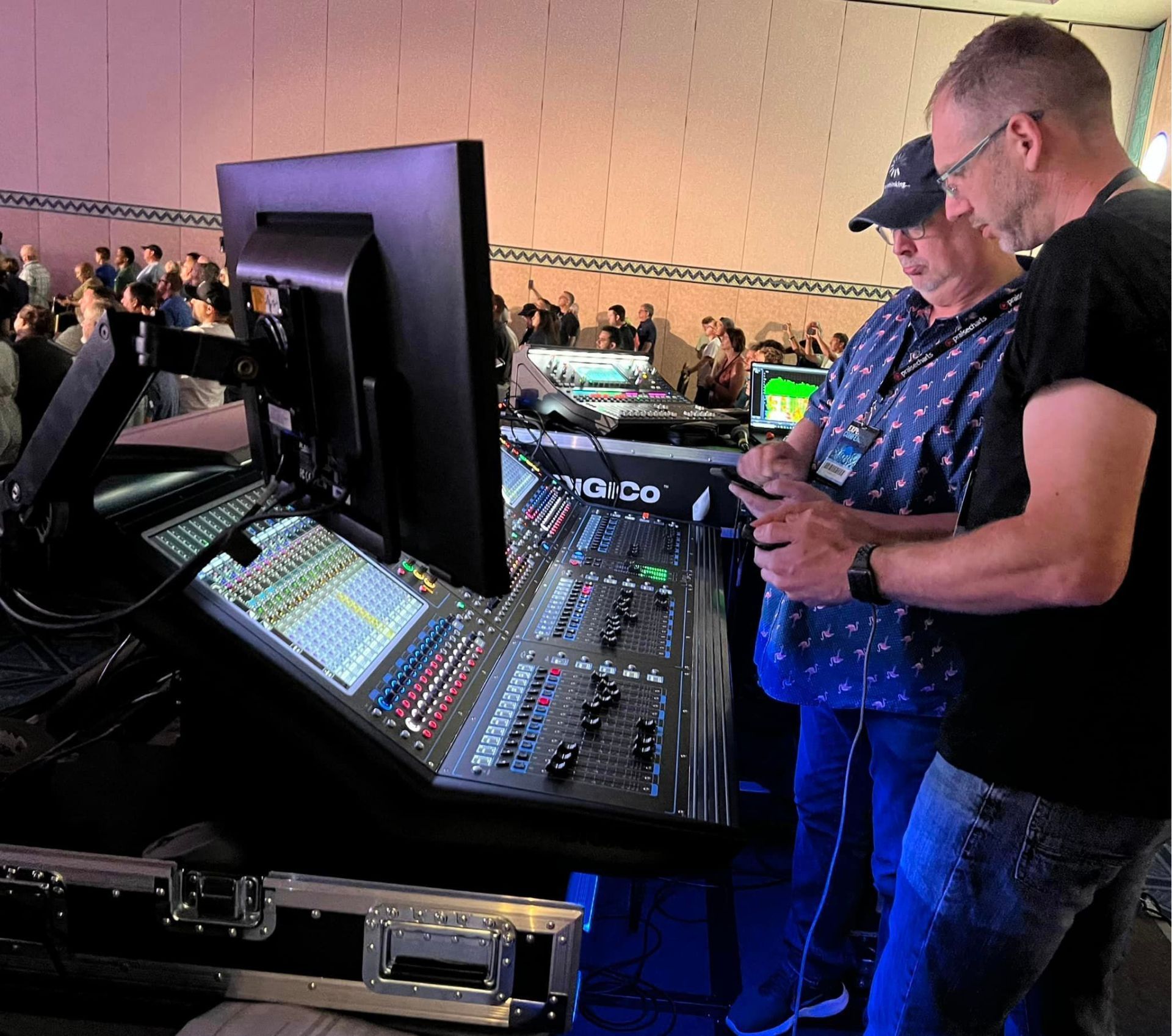
This one can sometimes get overlooked, but it matters quite a bit. If your volunteer sound operators are constantly fighting the board, if it takes a highly technical person just to get through a service without something going wrong, or if training new volunteers feels almost impossible because the system is so unpredictable, those are things to pay attention to.
Today’s audio systems are designed to be more intuitive. A well-designed system should be something a dedicated volunteer can learn to operate with real confidence. When the technology itself becomes a barrier to consistent ministry, it is time to ask whether the system is still the right fit for your team.
The Room May Be Part of the Problem
Sometimes what feels like an equipment problem is actually an acoustics problem, and the two are deeply connected. If your space has long reverb tails, harsh reflections off hard walls and ceilings, or inconsistent bass response throughout the room, speaker upgrades alone will not fully fix the experience.
Acoustic treatment and system design work together. Looking at the room itself alongside the equipment is foundational to making the right recommendations for your specific space. This is part of what makes a thoughtful design process so valuable before any purchasing decisions are made.
Supporting Today’s Ministry With the Right System Design
The way churches use technology has shifted. Even if your system sounded solid five or ten years ago, it may simply not be equipped for what ministry requires today.
Live Streaming and Broadcast
If your church has a live stream, a podcast, or any other broadcast component, your audio system needs to support it well. A system designed purely for in-room sound may not have the routing flexibility, clean output options, or processing needed to deliver a great listening experience online. That gap represents a real ministry limitation, especially for members who worship remotely or review messages throughout the week.
Expanded Programming and Multi-Use Spaces
Many churches use their main worship space for conferences, community events, school programs, or multiple service styles throughout the week. If your current system struggles to adapt to different configurations or input sources, that rigidity can slow down ministry rather than support it.
Compatibility With Modern Equipment
Older analog consoles and amplifiers often cannot communicate well with newer digital equipment, in-ear monitoring systems, or digital stage boxes. If your team is regularly working around compatibility limitations, a more cohesive system design could simplify operations and free your team to focus on what actually matters.
When Repair Costs Start to Outpace Value
There is a practical financial dimension to this conversation. If your church is repeatedly spending money on repairs, sourcing parts that are increasingly hard to find, or calling in outside help to troubleshoot recurring issues, it is worth calculating what that ongoing investment actually amounts to over a few years. In many cases, the total cost of maintaining an aging system approaches or exceeds what a well-planned upgrade would cost, especially when you factor in the long-term value of a system built to last.
Thinking about audio as infrastructure rather than expense changes the conversation. A system that serves your congregation clearly and reliably for the next ten to fifteen years is a very different investment than a patched-together setup that requires constant attention.
Take the First Step Toward Better Sound
If several of these signs resonate with where your church is right now, the next step does not have to be an immediate purchasing decision. It starts with a conversation and an honest look at where things stand.
At AE Global Media, we take time to understand your ministry before we ever recommend a solution. Our process begins with listening, asking questions about how your space is used, who operates your systems, what your congregation experiences week to week, and where you want your ministry to go. From there, we can help you develop a clear picture of what an upgrade could look like and what it would take to get there.
If your church is ready for a sound system upgrade, we are here to help. Reach out to our team through the website or call 800-467-3709 to learn more.